Dr. Benjamin Onyeagucha publishes two scientific articles
Dr. Ben Onyeagucha, Associate Professor of Biology within the Department of Sciences and Mathematics, this month published two articles in scientific journals.
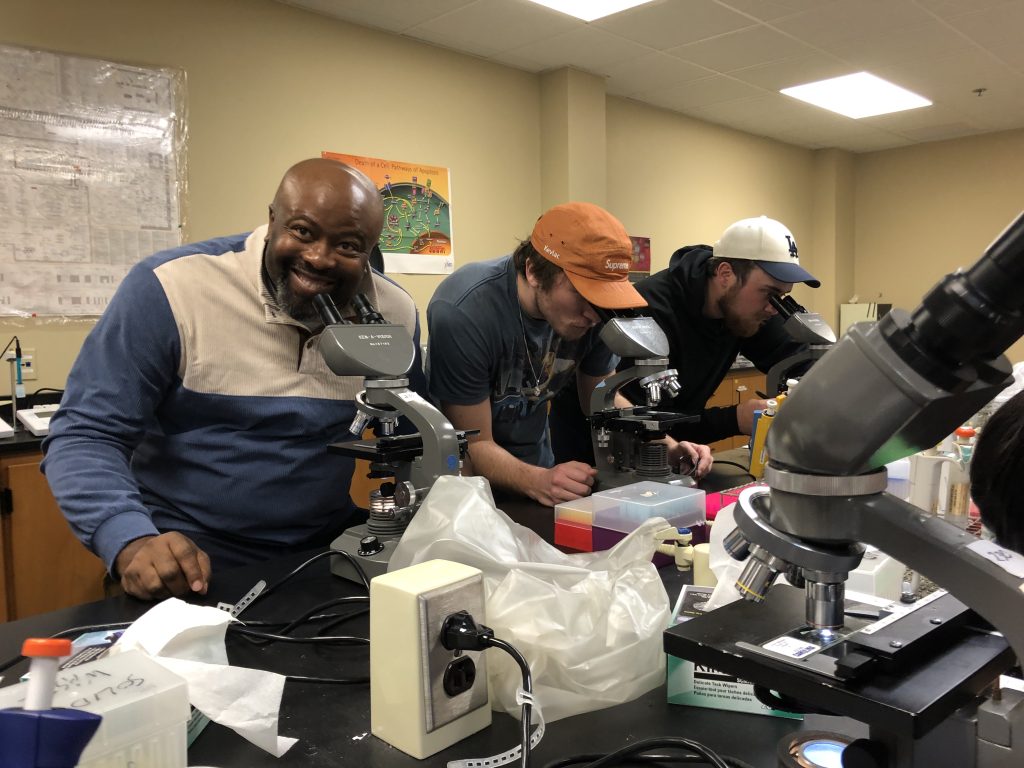
On one of those articles, Dr. Davida Crossley, also an Associate Professor of Biology in the department, was co-author, along with five departmental students.
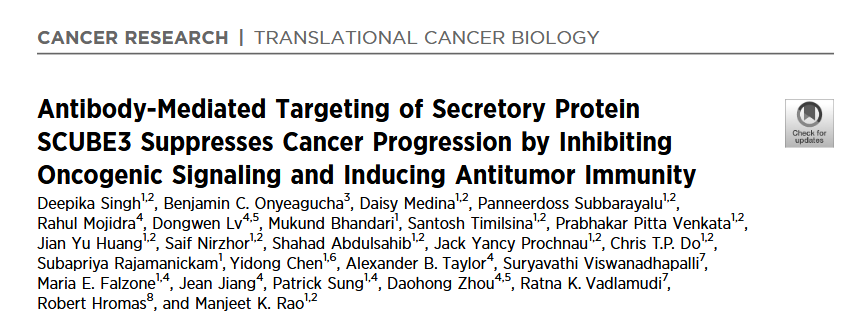
The first publication was a research article in the journal Cancer Research titled, “Antibody-Mediated Targeting of Secretory Protein SCUBE3 Suppresses Cancer Progression by Inhibiting Oncogenic Signaling and Inducing Anti-tumor Immunity.” This article relates to the original research Onyeagucha is carrying out on breast cancer in his departmental research lab. Cancer Research is the second-most frequently cited cancer journal in the world.
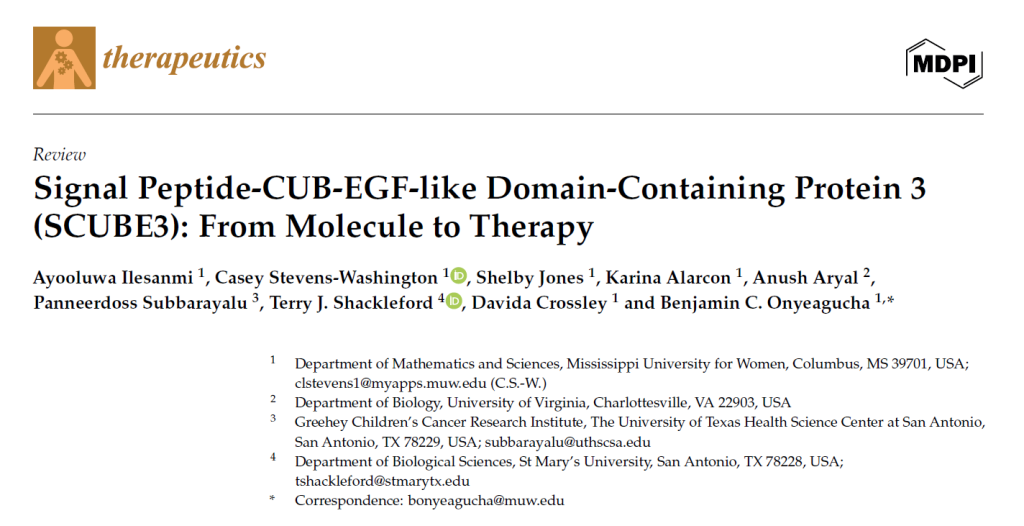
The second article was a review written by Onyeagucha and Crossley and departmental students Ayooluwa Ilesanmi, Casey Stevens-Washington, Shelby Jones, Karina Alarcon, and Anush Aryal. The review summarized the current understanding of the SCUBE3 protein, the subject of the research in Onyeagucha’s lab, and was titled, “Signal Peptide-CUB-EGF-like Domain-Containing Protein 3 (SCUBE3): From Molecule to Therapy.”
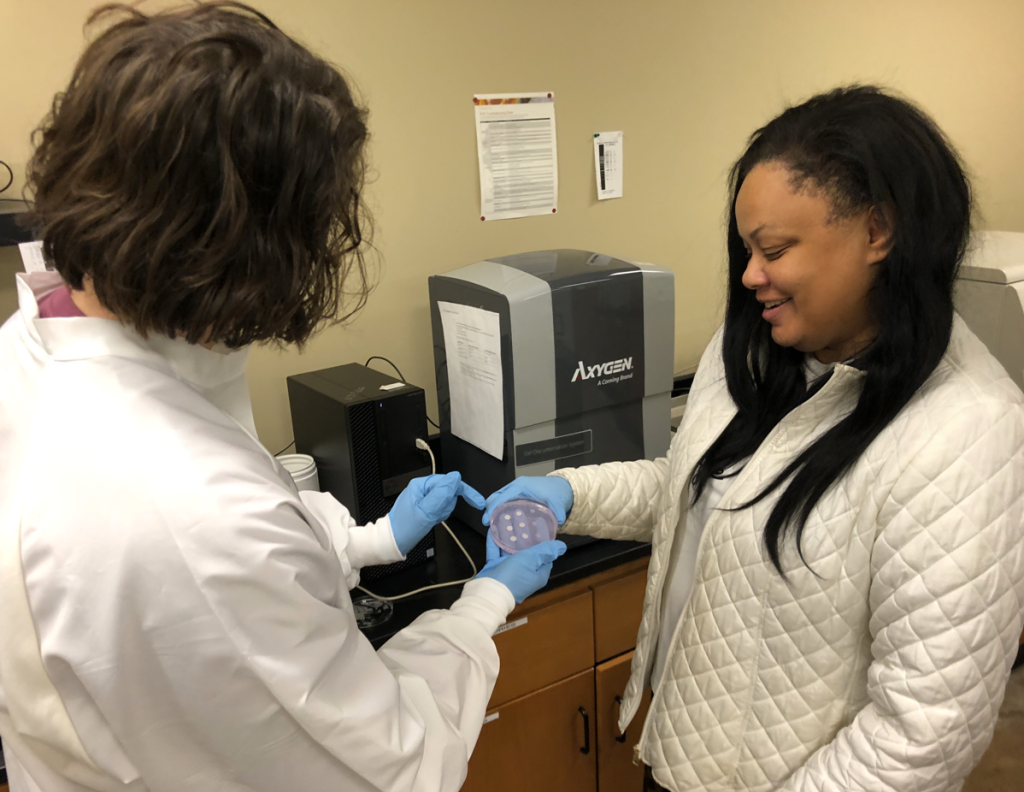
SCUBE3 is an acronym for Signal peptide-CUB-EGF-like domain-containing protein 3. The SCUBE3 protein in involved in multiple cancers, as well as other diseases such as cardiovascular disease and immune disorders. Dr. Onyeagucha’s lab focuses on the role the SCUBE3 protein plays in breast cancers.