
The Student Experience
Creating a Space Where Every Student Has a Place
When Mississippi University for Women developed its strategic plan in 2021, the plan was shaped by a pandemic that affected millions of people in unprecedented ways. Seventy to 80 percent of college students reported increased stress, anxiety or depression during and after the pandemic. Today, colleges across the nation face a new epidemic — loneliness — with more than half of students reporting that they lack personal connections on campuses, according to Inside Higher Ed. Students are navigating challenges such as affordability, life commitments, access to basic needs and technological advances, to name a few.
It should come as no surprise that the Student Experience emerged as a new pillar of the university’s 2026 strategic plan, “Advancing Our Worth: The Blueprint for Success.” Student Affairs administrators strongly support this priority and are committed to creating a campus environment where all students feel at home.
At the beginning of the year, W students completed surveys and participated in focus groups. Students said they wanted to expand programs that help balance life commitments, increase commuter engagement, personalize experiences, focus on well-ness and build connections.
Dr. Matthew Miles, dean of students, said, “Studies show that the more connected students feel to a university, the more likely they are to stay. Our students expressed how they felt accepted, valued, respected and supported as a community member connecting to the overall institution, which in essence is belonging.”
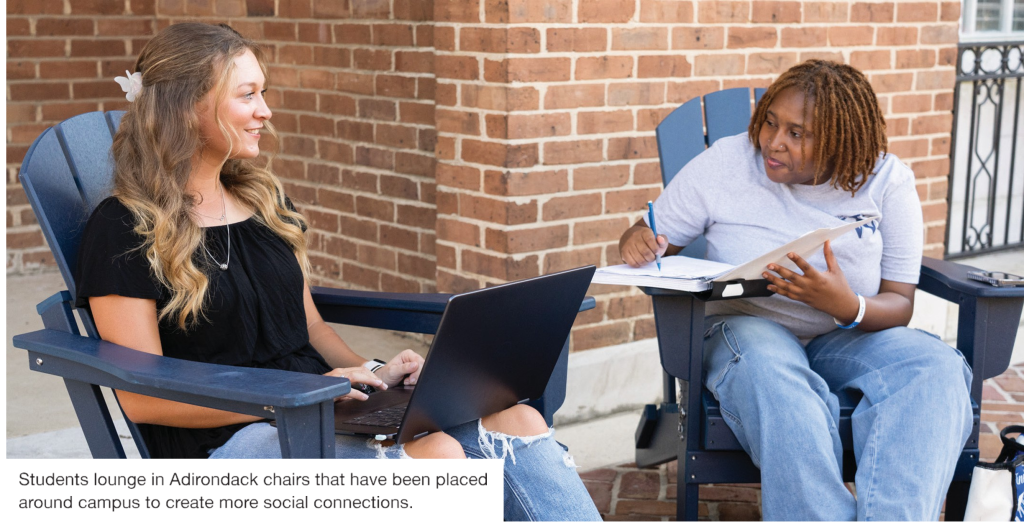
Initiatives to foster a sense of belonging include creating social space environments where students embrace shared interests and lived experiences. Blue lounge chairs have been placed around campus, encouraging environmental wellness. Other belonging initiatives include expanding living-learning communities in the residence halls, which are strategic partnerships with faculty and staff where students share common academic interests, experiences or aspirations.
“Studies show that the more connected students feel to a university, the more likely they are to stay.”
Dr. Matthew Miles
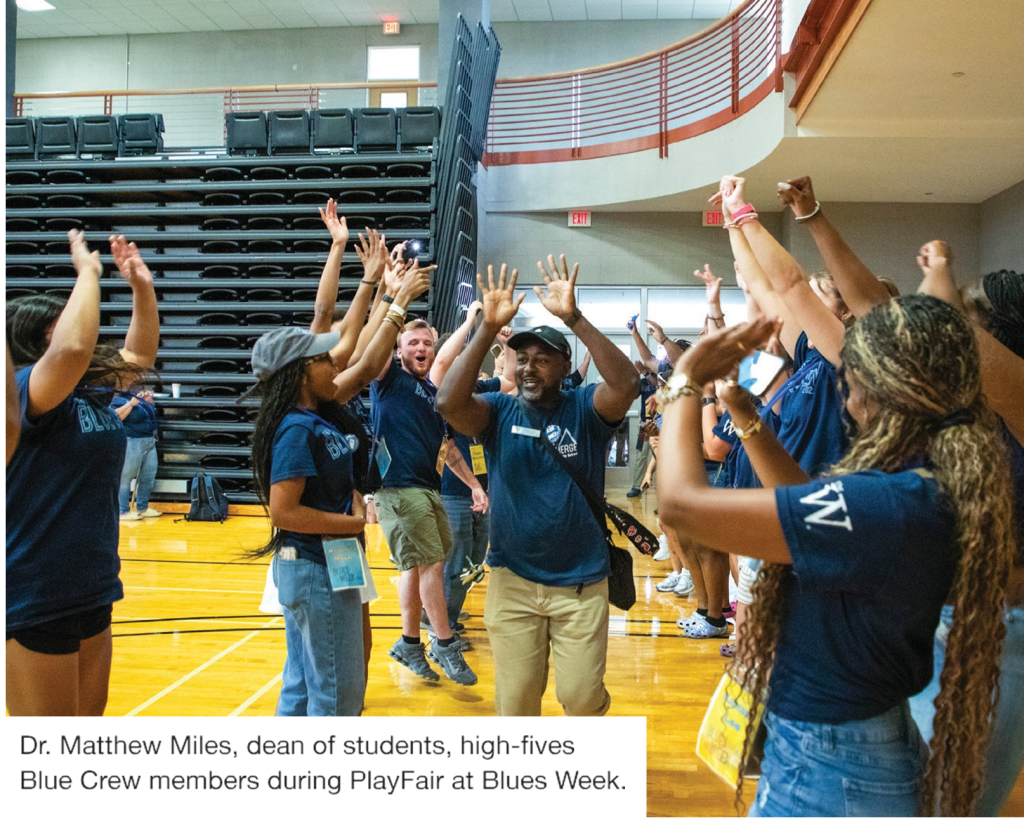
“The Student Success Center partners with other campus offices to host transfer student week and first-generation student week. Student Life recruits students every year to serve as Blue Crew mentors for Blues Week and aims to elevate their mentor training,” Miles said. “Campus Recreation and the Counseling Center also create physical and emotional wellness education initiatives to allow students to find their place of belonging or learn about what others value.”
Miles emphasized that Student Affairs goes beyond internal departmental goals, relying on faculty and staff contributions to shape the Student Experience pillar.
“With a unified focus on the student experience, the campus community can be intentional to promote the well-being and holistic development of all students, engaging through varied modalities, with accessible resources and programming, therefore creating intentional opportunities for every student to connect, matter, grow and lead,” he said.
Interim President Scott Tollison said, “We needed to highlight that students are at the heart of everything we do. The student experience was a major part of our previous plan, but making it its own pillar will help us centralize our efforts. Longer term, this will help us differentiate ourselves from other universities and make it easier for us to tell the community and prospective students the story of what sets us apart.”
Dr. Brian Anderson, chair of the Planning and Institutional Effectiveness Council, said the 2021 strategic plan was cast in a (pandemic) time when we had to be sure we could pursue our core educational goals while keeping an eye on expenses.
“At that time, we didn’t know how long the pandemic conditions would endure. Even though many of our online learning technology and pandemic protection purchases were funded by the federal government, we had to be very careful not to create an overly tech-dependent educational model that we could not sustain when the federal funds dried up.”
Anderson explained that the Degree Completion priority from 2021 (and 2016) was laser-focused on showing Jackson that we can support our students through graduation. He added that the recruitment strategy was a great challenge in the midst of the COVID-19 pandemic. “We had to make sure the students we did have enrolled were properly supported as they progressed. We now have an Enrollment & Retention priority that includes completion and is more balanced in its view of how we interact with students from the moment we meet them as prospects all the way through commencement.”
The university’s latest strategic plan was a campus-wide effort, also including alumni and community members, which led to more engagement and transparency.
“A casual observer can compare this plan with those dating back 20 years and conclude that we are a lot more verbose than we used to be! I think that is because the university has evolved in very important ways in cultivating shared governance and transparent processes,” he said.
Tollison also echoed Anderson’s sentiments.
“This strategic plan seemed to have more campus as well as community input. It was a very large group that reflected a number of the values that make The W special. I can’t say enough about Dr. Anderson’s leadership and stewardship of the process. He created an environment where all voices were considered and synthesized into a cohesive document that will serve as our blueprint for success over the next five years.”