
California Dreamin’
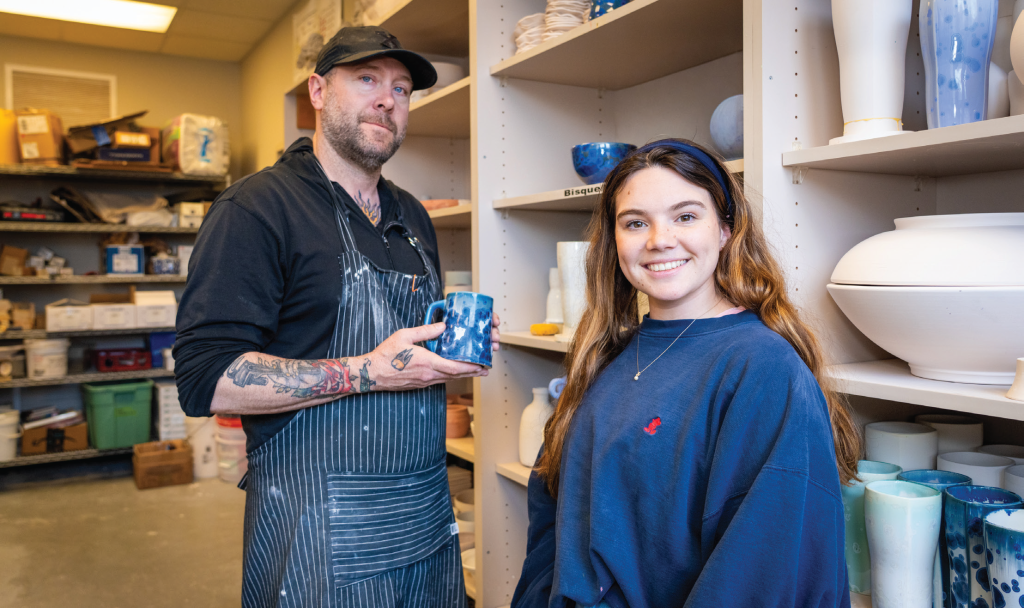
Before entering college, Erin Crabtree dreamed of becoming a meteorologist — more specifically, a storm chaser. The junior from St. Patrick Catholic High School in Biloxi was led to Columbus by way of the legacy and strength of the Long Blue Line within her family. What was once a temporary stop at Mississippi University for Women became a defining moment. One class, one faculty member, one bold idea and one trip to California equals a dream forever changed.
Arriving as an “undeclared” major and looking to what would be next in life, Crabtree began her collegiate career by taking basic classes. It was at that instance in Summer Hall, her mind and heart were changed.
“I took a ceramics class my first semester, and I immediately knew this is exactly what I wanted to do,” Crabtree said.
One class sparked a conversation with art professor Ian Childers. Doing her due diligence, Crabtree questioned Childers about career possibilities in art and ceramics, asking simply, “What is a ceramist?” Intrigued by her new passion, she signed up for a work-study position in the ceramics lab, which lasted three semesters. Through the experience, Crabtree learned the ins and outs of managing both a studio and a classroom.
Crabtree said, “It’s important to be where you want to be and surround yourself with people who will elevate you.”
But Crabtree wasn’t the only one who had big ideas and a question to ask. Childers had his own: “Want to go to California?”
For the past three years, Childers had spent his summer and winter breaks on the West Coast sharing his ceramics expertise. He had long pondered the idea of bringing a group of students to visit, to network, see studios and meet professional artists, many of which he calls friends.
Crabtree’s response to Childers’ big idea: “Why not create the opportunity, here, now?”
They made a plan. They created a list of who’s going, the educational opportunities and fundraising opportunities, as college students are not known for their financial abilities to spontaneously book a flight to Los Angeles and spend a week on the West Coast. A figurative road map to ceramics in California was created.
Step one of the process was the easiest: identifying interested students. Conversations were had, announcements made and an interest list was formed. Step two was to build connections. Childers began networking and reaching out to fellow artists from Los Angeles, Santa Monica and San Francisco. Meanwhile, Crabtree and fellow art students Justin Hampton and Henri Krogh contacted the Office of Development and Alumni and pitched their idea. After receiving a full endorsement, students began contacting alumni.
First, the students presented their idea to the local Lowndes County (LOCO) Alumni Chapter. Afterwards, for the next three weeks for three hours a day, they would call alumni asking for support. The final phase of their networking and fundraising efforts was hosting a gallery show in the MUW Art Gallery. Campus and community members, along with alumni, were invited to view student artwork and donate towards the trip. The showing resulted in $2,500 being raised. The results of the phone calls, presentations and networking totaled $17,582.68. To jumpstart the effort, an anonymous $5,000 gift was made by a donor in California who had heard about the students’ initiative.
STUDIOS, MUSEUMS AND NEW PERSPECTIVES
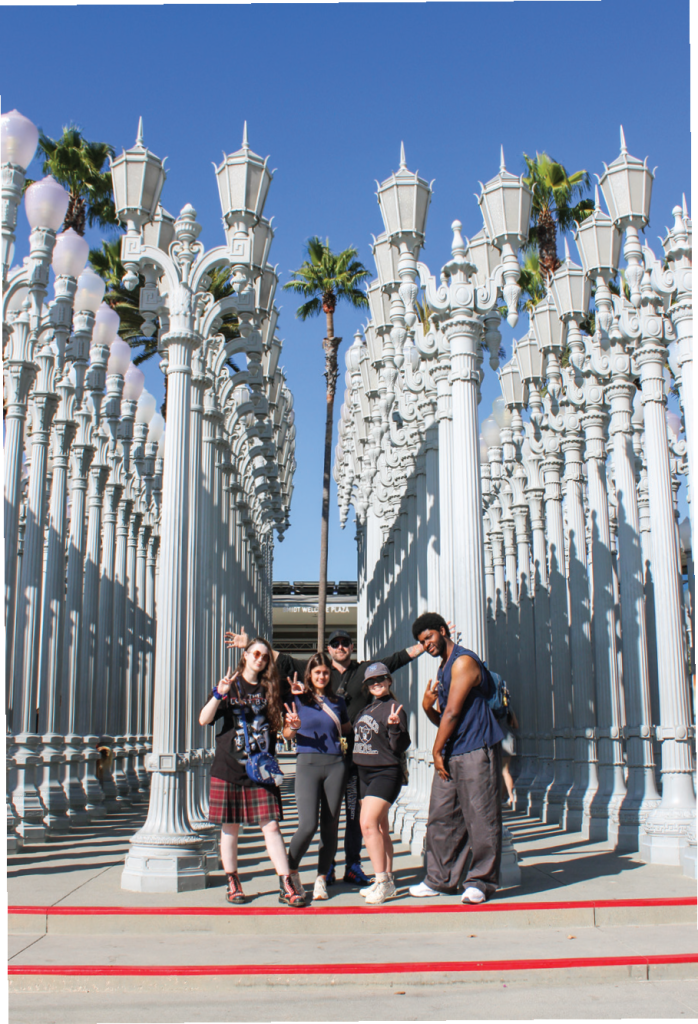
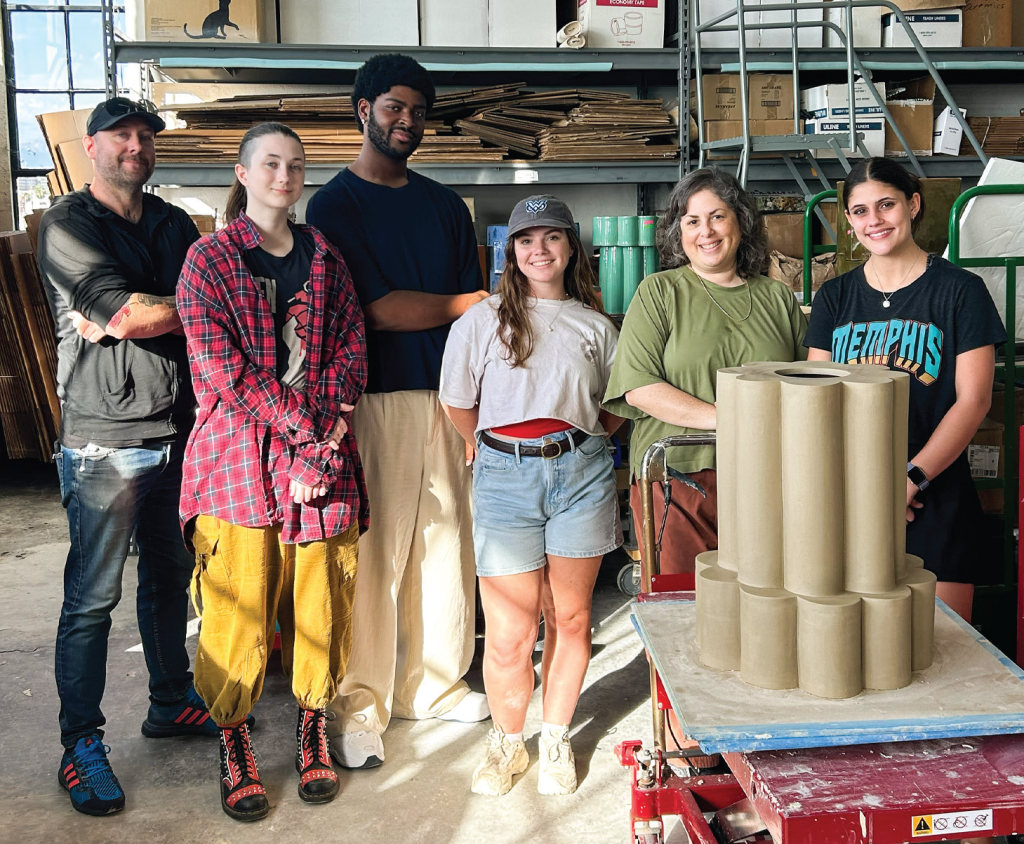
From Oct. 9-20, 2025, Krogh, Hampton, Crabtree and Olivia Ivey under the guidance of Childers adventured to the West Coast. Landing at LAX and starting in Los Angeles, the focus was Still Life Ceramic Studio. At the studio, students were introduced to Alake Shilling, an internationally featured and long-term resident artist, and Evgenia Ozerova, Still Life studio tech and artist. Additionally, while in L.A., students visited the Broad Museum and held an extensive discussion with Bari Ziperstein, founder and owner of BZIPPY. The ceramic furniture maker shared hours of her time discussing the business side of California high-end furniture and her journey to success. BZIPPY’s work has been featured in the New York Times, Elle Décor, Interior Design Magazine, and sold to Dior. The Los Angeles County Museum of Art (LACMA), Laguna Clay, American Museum of Ceramic Art (AMOCA) and the Hammer Museum were among other venues visited during their time in the Los Angeles area.
Departing toward the San Francisco area, students stopped midway to visit Kenny Sing, owner of Turn Studios and a popular social media clay influencer. Sing shared his processes for filming, photographing and marketing.
Once arriving in the San Francisco Bay area, students spent time at Clayroom, where Childers teaches workshops. Each day, the students would split time with Childers at Clayroom and visit other museums. On the night of Oct. 17, the students witnessed Childers deliver a public lecture for Clayroom.
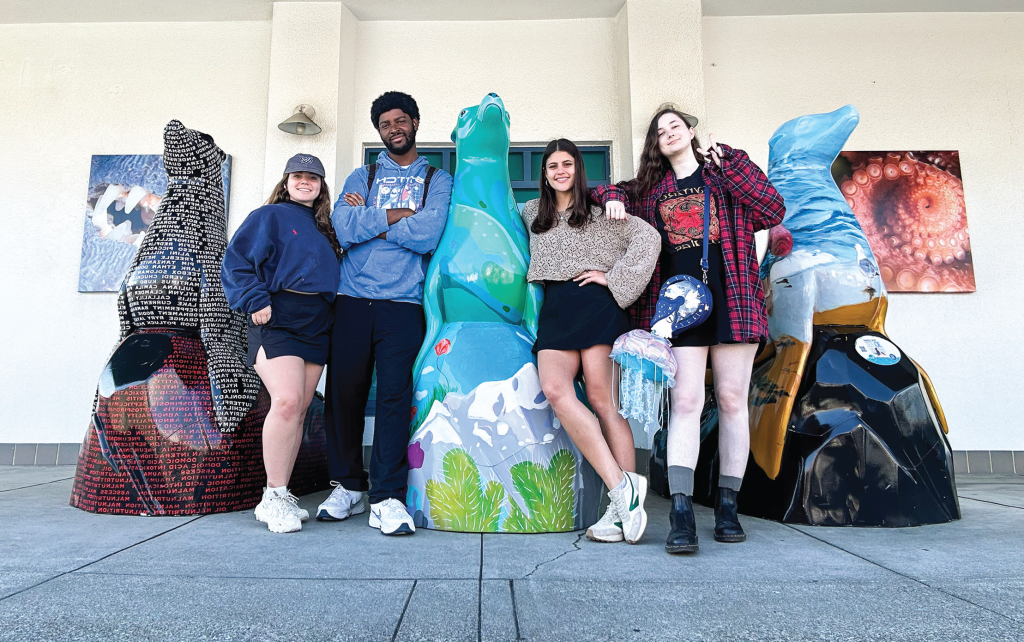
Throughout their time in California, the students had multiple dinners and lunches with artists in the area. They even met with alumni like Jade Carson, who is a working artist in San Diego, visited more museums like the De Young Museum and participated in “touristy” adventures like seeing the Golden Gate Bridge, the Santa Monica Pier, touring Alcatraz Island and dipping their toes into the Pacific Ocean, which, according to Childers was not optional.
A CLASSROOM WITHOUT WALLS
“Our job as educators is to open the world, not give lectures,” described Childers.
Childers believes that ears, eyes and hearts open when lessons are taught from the studio. He admits that as educators and seasoned professionals, the small steps and humble beginnings are easily forgotten. The skills and knowledge gained in the classroom are just the beginning.
“Experiential learning outside the classroom is fundamentally important,” said Childers. “Any experience changes a student — even going somewhere small. Travel opens the world.”
About the process of planning the trip and the trip itself, Crabtree said, “[The trip] made me interested in more of an administrative role and opened up new possibilities of ceramics and arts. I didn’t think I would ever experience the trip until I had the push to do this.”
Crabtree’s perspective has been forever changed, and it all began with one ceramics class. A class that sparked a conversation that uncovered a big idea. A campus community made that idea a reality. The collective goodness of that community changed lives and created opportunity.
“I brought back connections more than anything,” said Crabtree. “It’s dangerous to stay in one mindset when there’s so much knowledge to learn from others.”
Those others, she is referring to. Offered an invitation to the students who visited. Come back, join us, stay, we have internships, jobs and hospitality.