
A Summer of Salt, Sand & Self-Discovery
How the Margaritaville Restaurants Leadership Program Prepares Students in the Kitchen and Life.
White sands, gentle breezes, and waves crashing onto the surf soothe the soul and relax the mind. An umbrella, chair and a book only add to the temptation to drop everything and explore the next beach house rental or weekend getaway. The Gulf Coast is a place of relaxation, fun and memories. Families gather as the sun fades to capture the perfect golden-hour family photo. Others rise with the sun in hopes of being the first to leave footprints in the sand or perhaps discover seashells delivered from the nightly tide. For some, it’s the lure of that perfectly cooked red snapper, grilled mahi mahi, or one of the seemingly thousand shrimp concoctions. Behind the scenes of the hospitality and relaxation industry, there exists a roller coaster of cheeseburgers.
Senior culinary arts student Meggen Sitton, a Nampa, Idaho native, decided in fall 2025 that she wanted to take a ride on a roller coaster. Only to her at that time, the roller coaster was known as an internship.
“I want to become a manager. I want to own my own business one day,” Sitton said. “I thought this would be a good opportunity to at least start in that direction.” So, she applied to the Margaritaville Restaurants Leadership Program.
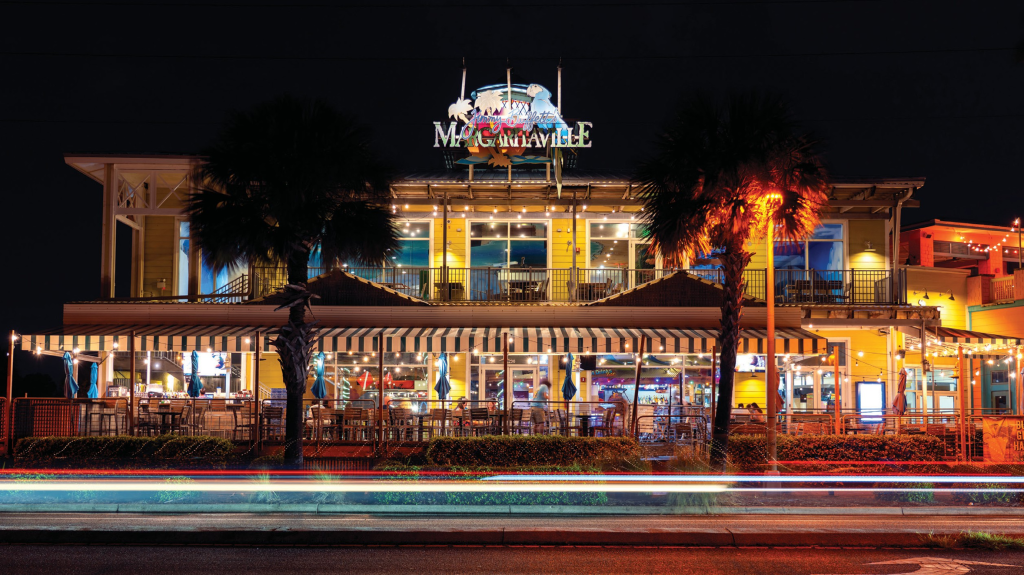
Jimmy Buffett’s Margaritaville Panama City Beach faces Front Beach Road and stares into the gulf ’s renowned emerald waters. Providing old beach hangout vibes, two decks, live music and, of course, a generous drink menu, the restaurant offers beachgoers a place to retreat from the sun or escape the occasional rainy day. Welcoming guests to Pier Park, the only entertainment and shopping complex on the beach, foot traffic isn’t a problem. From Memorial Day to Labor Day in 2025, the restaurant served 16,731 burger patties and 20,733 pounds of chicken. And in case you were wondering, Cheeseburger in Paradise was the most popular choice.
She knew it would be busy. After all, it is a tourist town that accounts for more than $3 billion in visitor spending annually. Sitton just didn’t expect it to be, as she described, “go, go, go all day, all the time.”
“The Margaritaville Restaurants Leadership Program gives students the opportunity to build professional skills through real, hands-on experience in a working restaurant environment,” said Erin Gonzalez, Margaritaville’s talent acquisition manager.
When students arrive, they are not simply known as “the intern.” They are fully integrated into the Margaritaville culture. They are welcomed to the team and take on meaningful responsibilities learning how strong hospitality operations depend on communication, teamwork, accountability and leadership.
The Margaritaville Restaurants Leadership Program combines day-to-day experience with structured learning, access to company leaders, professional development sessions, and exposure to areas such as operations, culinary leadership, human resources, finance, marketing and community involvement.
Gonzalez explained, “Students leave with a better understanding of how a business operates, how leaders make decisions and what will be expected of them as they move from college into their professional careers.”
In addition to the Margaritaville Restaurants Leadership Program, Sitton participated in Margaritaville University, an online learning management system designed to help team members develop the knowledge and skills needed to succeed throughout their careers with Margaritaville. No matter one’s position, from dishwasher to general manager, Margaritaville University provides structured learning through job aids, training resources and “Steps to Success” for each role.
Sitton said, “Being at Margaritaville, I got to experience what it’s like to run a kitchen at the single-store level. I also talked to the C-suite, where I heard about the processes and the steps required to manage multiple levels at once.”
Through the program, “MargU,” as they call it, interns were introduced to senior leadership and executive teams. Students gained insight into the company’s vision, culture and values directly from the people shaping the organization. They had the opportunity to ask questions, hear career stories and better understand how leadership supports the growth and development of every team member. At other times, they discussed their favorite Jimmy Buffett song.
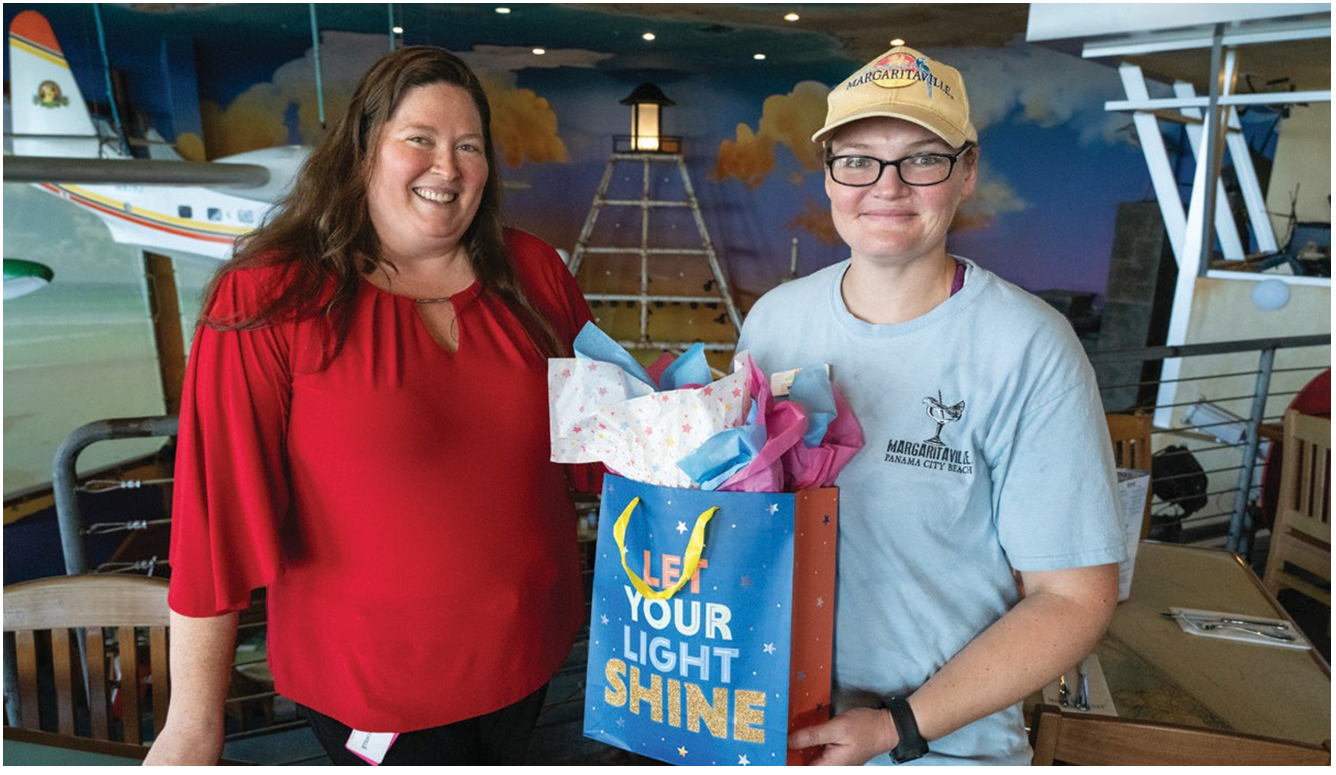
Gonzalez said, “At Margaritaville, we believe investing in people is one of the most important things we do. By combining structured learning through Margaritaville University with meaningful access to our leadership team, we help students see not just the job they’re preparing for today, but the career opportunities that can grow from it.”
One of the most valuable lessons Sitton gained from MargU was recipe costing: knowing how to read a recipe and understanding how those recipes affect the costs for the company. To successfully operate a restaurant, especially one the magnitude of Margaritaville, reading and executing a recipe is only a part of the equation. Sitton now fully understands that too much chili and nacho cheese on the Volcano Nachos causes issues. Every item needs to be tracked and used as specified.
Sitton began her internship on May 19 and completed the program on August 9.
“Leadership is developed, not discovered,” said Sitton, quoting leadership expert John Maxwell in her midterm reflection.
Sitton described her first day as walking into the calm before the storm. Then without a warning, 50 egg rolls needed to be ready. Sitton admitted it was overwhelming at first, but the rush quickly became routine.
“To be honest, I had a lot of hesitation going into this program. I haven’t been in the restaurant industry for very long. I haven’t been a leader of any kind in the kitchen, and I decided to dive into the deepest part of the pool without knowing how to swim,” said Sitton.
Throughout her internship, Sitton would primarily serve as an expeditor while also exploring other roles. She was the final step, the proofreader, the authenticator, quality control, and the last eyes on all the dishes being served. She ensured that the ticket matched the order and best represented Margaritaville. Then at the end of her shift, Sitton would start prepping for the next day by cleaning up, making sure fryers, grills and floors are clean. A typical day consisted of Sitton arriving at the restaurant between three and four in the afternoon and leaving between one and two the next morning. The week of July 4th — arguably the biggest and busiest week of the year — Sitton logged an impressive 57 hours.
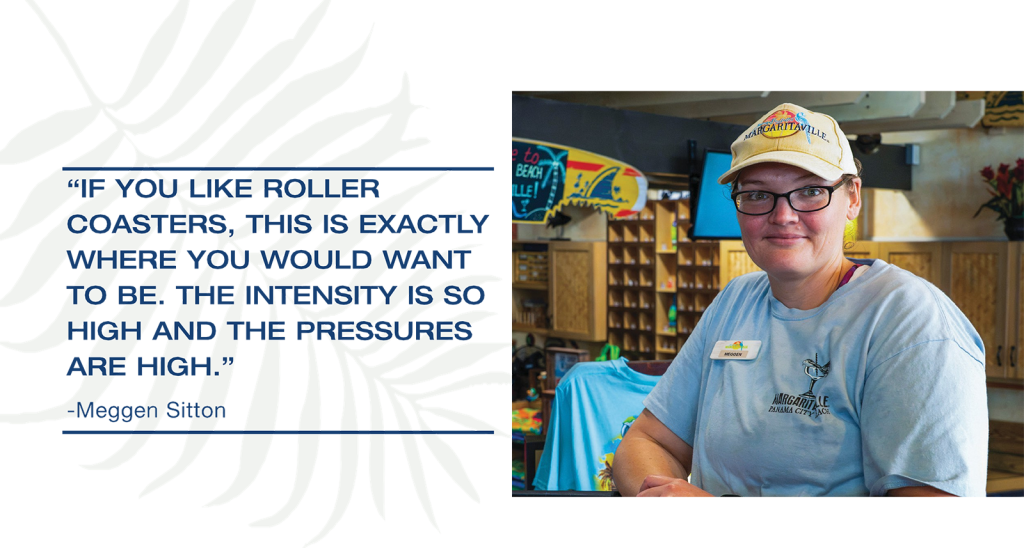
“If you like roller coasters, this is exactly where you would want to be. The intensity is so high and the pressures are high,” Sitton said.
Some say that pressure is a privilege because you have excelled to higher standards and new opportunities. The pressure and intensity from the cheeseburger roller coaster facilitated a journey of self-discovery. The experience motivated Sitton to discover her own leadership approach, not just replicate the leaders that she has worked beside in the kitchen.
“While you are training with people, the biggest takeaway is you need to find your own style,” said Sitton. “Managing people in a larger setting is more challenging than it looks… While you try to imitate, it’s not going to be your style. So, you just take what you can from what you learn and, you know, mesh it up until it’s going to fit your style and how you work with people.”
One of Sitton’s biggest life lessons was discovered during one of her “really, really bad” days. A manager simply slowed her down and reminded her, “It is just cheeseburgers and French fries.” A lesson that we all can learn. Don’t make things bigger than they are and don’t get overwhelmed. Take a moment. Don’t make mountains out of molehills. Or perhaps in this case, don’t turn a garnish into the main course.
Take a breath and think — “cheeseburgers and French fries.”
While the internship brought many ups and downs, and the occasional loop-the-loop, Sitton was prepared to succeed. The location and scenery may have changed, but her core skills and culinary foundation instilled by the Culinary Arts Institute provided knowledge, skills and a sense of comfort to draw from.
“All the courses that I have taken up to this point have really provided me with a good foundation, definitely the exposure to a commercial-sized kitchen, because once you understand the flow of commercial kitchens, it’s all going to be the same,” explained Sitton.
One day Sitton would venture into the kitchen and be asked to make a roux, a base for soups, gravies and sauces. Sitton recalled the lesson from day one of her very first culinary class. She often wondered while sitting in that class, “Am I really going to need to know these five mother sauces?” That thought has been silenced now that she realizes why the five mother sauces are fundamental and why she was pushed in every class since her first to make one of the mother sauces.
For Sitton, the satisfaction was found in the simple compliments from patrons. When servers would relay compliments — the food was great or the experience was great — that was the really rewarding part.
“Looking back on my internship, I gained confidence in myself and found my voice in the kitchen. I started the summer unsure of my abilities, but by learning from my mentors and applying their guidance during service, I grew both personally and professionally. I left knowing that with hard work and dedication, I can achieve my goals,” Sitton said.
Learning the legacy of Jimmy Buffett, how he built a brand that provides “escape on vacation,” and the invaluable experience of a high-volume, commercial kitchen, Sitton returned to campus with the confidence to continue to step out of her comfort zone.
“This opportunity taught me a great deal about myself and about the importance of every position in creating the ‘Island vibe’ that Jimmy Buffett wanted all his guests to feel,” described Sitton. “My experience at Margaritaville was positive, educational and inspiring, and I am grateful for the opportunities and guidance I received throughout my internship.”
Theory to Table
In spring 2026, the university developed “Advancing Our Worth: The Blueprint for Success,” a university-wide strategic plan with five core focuses: academic excellence, student experience, strategic impact & engaged alliances, enrollment growth & retention and operation excellence.
Internships, experiential learning, networking and career pipelines are all key tenets of the plan that reinforces and furthers what The W does best: empowers students.
For The W’s Culinary Arts program, internships that immerse (maybe the proper term would be marinate) student chefs allow students to discover, redefine and ultimately build skills and confidence before entering the workforce.
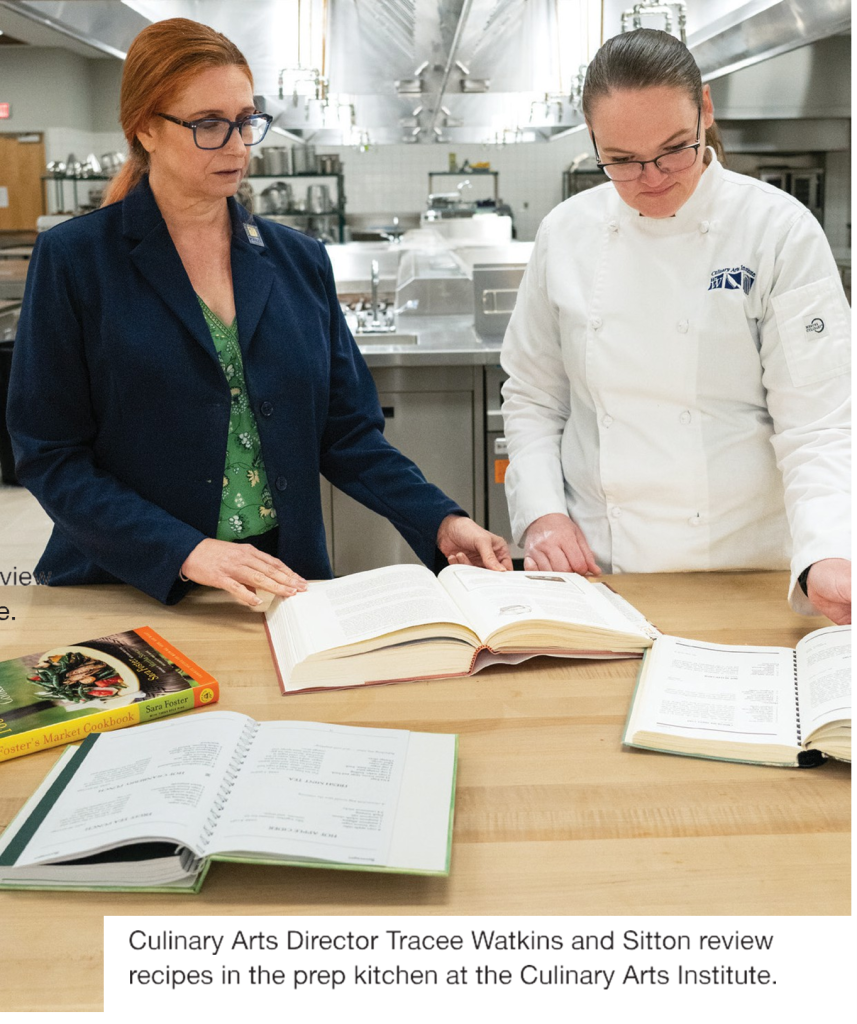
“Students need to take theoretical concepts from The W’s kitchen labs and apply them in real-world situations,” said Culinary Arts Director Dr. Tracee Watkins.
Techniques, foundational skills and the application of cooking for smaller groups, with events like the Savor The W series, are available through the Culinary Arts Institute. The opportunity to cook for thousands is found through internships like Margaritaville.
Watkins explained, “So much of what we do is based around a recipe and a technique. They learn that in a controlled environment, in a lecture and then in a kitchen lab. But then, how do you take that technique and that recipe and work with it in a fast-paced environment? Oftentimes an ingredient is missing, or you have a guest who has an allergy or a preference that needs to be accommodated.”
Putting the theory into practice, or in this instance, on the table, involves developing versatility and flexibility while staying true to the recipes and techniques, all while remembering the cost at hand.
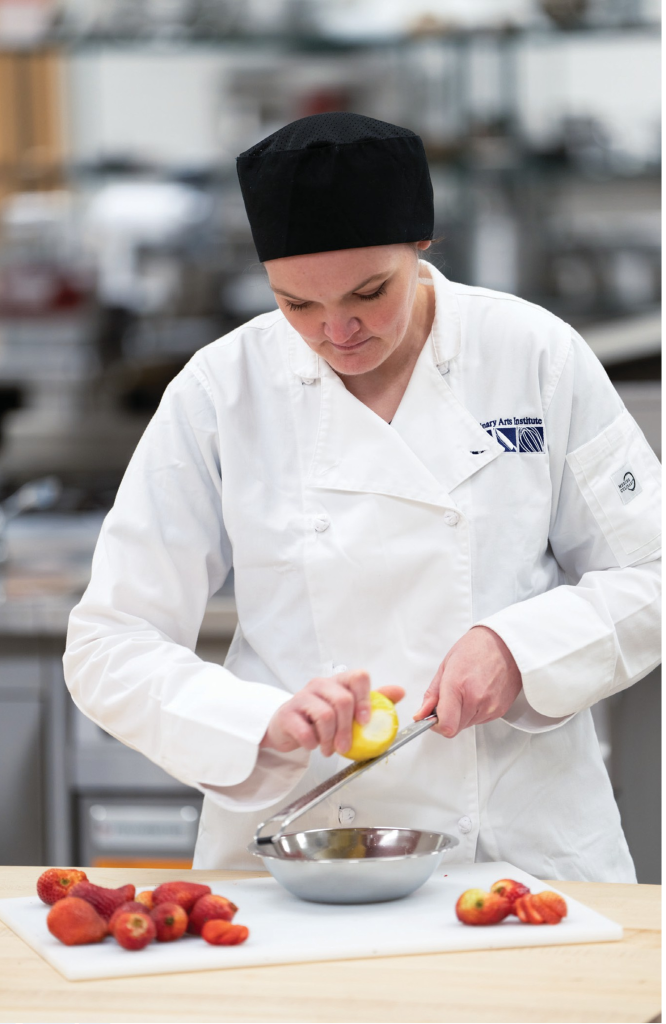
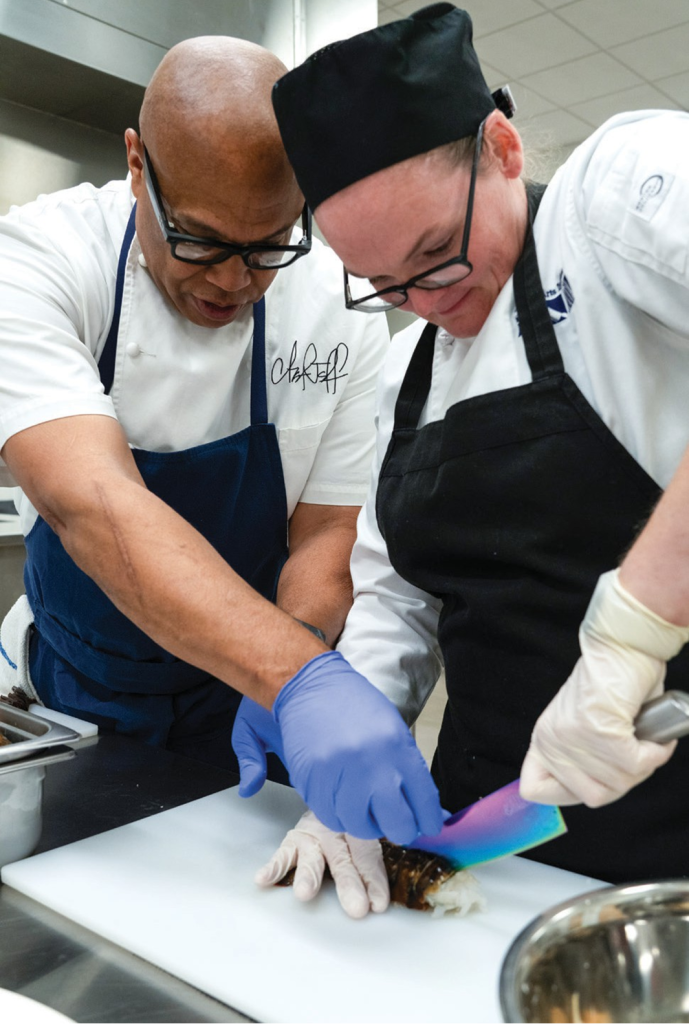
Celebrity Chef Jeff Henderson provides hands-on instruction to Sitton. Henderson, a New York Times bestselling author and television personality, visited culinary students to offer career advice and share his expertise before speaking at the 2025 Welty Gala.
Experiential learning and internships not only develop culinary skills; they are tools used to discover or, in some cases, redirect a student’s interest or goals. Students are asked to evaluate their skill set and even the preparation offered from their previous classes. A significant amount of reflection is required to develop their summary portfolio, a more than 40-page document. In Sitton’s case, it was 53.
“Internships are defining educational experiences,” said Watkins.
Once completed, the summary portfolio is composed of three main reflection points and weekly journal entries, which presented opportunities for students to look inward from the start until the very end. Photography documentation is required. Sitton’s day-three entry offered lovely key lime pie photos!
But the cheeseburger roller coaster doesn’t stop with Sitton.
In summer 2026, Mississippi University for Women entered into a partnership with IMCMV Management LLC, the licensee operator of Margaritaville in the United States, to participate in the Restaurants Leadership Development Program (MRLDP) at Gulf Coast/Panhandle locations.
The new partnership will establish a direct and preferred internship pathway for students enrolled in the Culinary Arts Institute at The W providing credit-bearing experiential learning for the students while building a reliable seasonal and early-career pipeline for IMCMV.