
Advancing Our Worth
With a Worthy Plan
When it comes to universities, their true value is determined by a litany of factors, and to ensure the institution is focusing its energy on the right areas and maximizing its impact, a plan needs to be in place.
For Mississippi University for Women, the strategic plan, titled “Advancing Our Worth: The Blueprint for Success,” is that guiding document.
The strategic plan is revisited and revamped every five years, and former President Nora Miller approached the Planning and Institutional Effectiveness (PIE) Council in fall 2025 asking them to spearhead the effort of developing the new plan.
“When you look at the 2021 plan, it was very much an artifact of the pandemic times, and especially the goal of financial sustainability just seemed rather reactive in a way, and we didn’t intend it to be,” said Dr. Brian Anderson, dean of the College of Arts and Sciences and chair of the PIE Council. “We’re in a much better position now, and we can speak much more confidently about what we do academically and otherwise on this campus.”
The PIE Council was expanded to include around 15 additional people from across campus, as well as a few alumni and community members including the mayor of Columbus and the president of the Lowndes County Board of Supervisors, ensuring that all of the major stakeholders in a new plan would have representation in the creation of it. The expanded council, named PIE Plus, began meeting and diving into the previous plan to see what was still sound and what needed to be redone.
Another key factor was establishing the pillars, or the points of focus for the plan.
“I arranged input sessions, two with faculty and staff, one with students and one with alumni and community supporters,” said Anderson.
The new plan features five pillars: Academic Excellence, Student Experience, Strategic Impact and Engaged Alliances, Enrollment Growth and Retention and Operational Excellence.
Student Experience
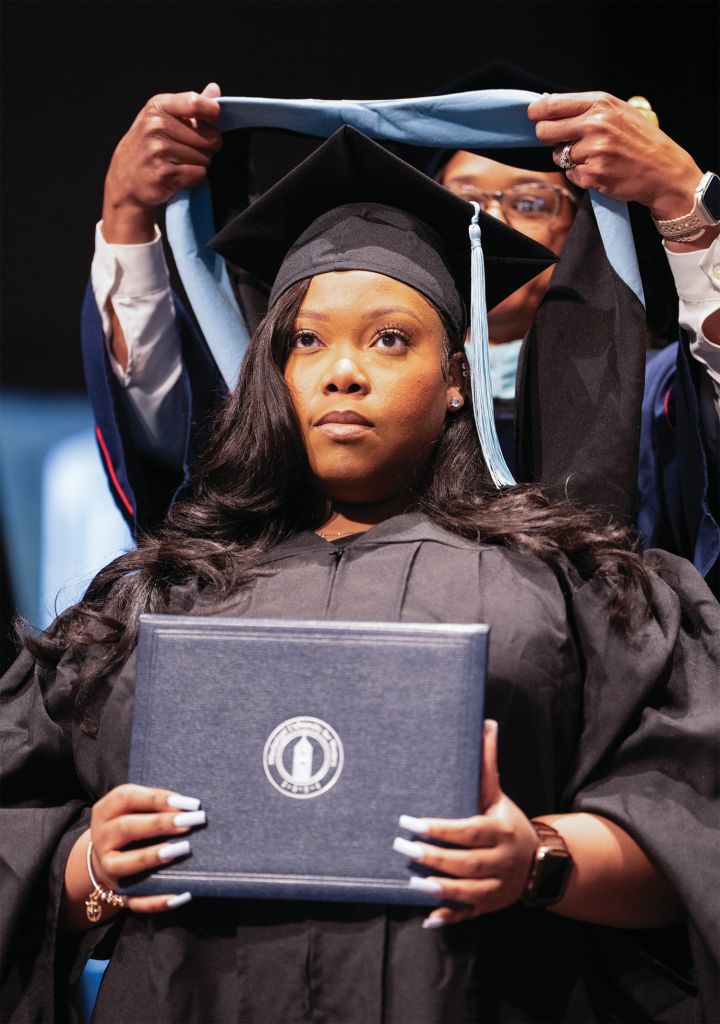
A key difference between the previous plan and the new one is the focus on the “Student Experience.”
This is the second pillar of the new plan, and is a direct result of the student input session.
“It was a nice crowd, and they were very engaged,” Anderson said. “They said, ‘We need the student experience to be a priority.’ They were talking about how, even though we have a large commuter population, many students live on campus or stay on campus a lot, and there wasn’t as much for them to do as there might be at other schools.”
The “Student Experience” emphasis includes strengthening student support systems, teaching effective and ethical approaches to artificial intelligence, promoting wellbeing, prioritizing civic engagement and supporting student athletes inside and out of the classroom, to name a few.
Interim President Dr. Scott Tollison is particularly proud of the addition of the Student Experience to the plan.
“The student experience has always been key to our strategic planning, but by making it its own pillar, I believe we can make it a concerted effort,” Tollison said. “I think that we can focus on the student experience, and its distinctiveness, to help with enrollment growth.”
He added that by leveraging The W’s student experience, contrasting it to the experience of a larger university, could appeal to the students looking for a more personalized learning experience. Boasting a student-to-faculty ratio of 11:1 and offering ample opportunities to engage with their education both on campus and online, The W seeks to foster a sense of belonging within its student body.
Strategic Impact & Engaged Alliances
The third pillar, Strategic Impact and Engaged Alliances, focuses on building a network of support from external stakeholders, such as alumni and community leaders.
This external support has been crucial, especially during the last two years when The W has been in the crosshairs of multiple unfavorable pieces of legislation.
“The first two goals or priorities are all about what we prioritize on campus, and then the third one is about how we reach out in all the different ways,” Anderson said. “We have to always have a mind about what people think of us, even if they haven’t been on campus.”
“The students who come here deliberately chose not to go to a larger school because it’s not the model of education they want, and it’s not the one that can help them thrive. We have to communicate that without sounding defensive, because this is a school that is in good shape on all the metrics. It’s just that we don’t get the attention that other schools get for a lot of reasons.” Having a network of informed individuals who can effectively tell the story of the University to outside parties is crucial.
“We have to get students thinking about what life is like after college, and also we have to show that this is what you can do with this degree.”
Dr. Brian Anderson
Liberal Arts
Another focus of the plan is bringing awareness to the value of a liberal arts education. This has been a struggle for The W for years, and the effort is far from over.

“We have to make sure that, externally, we communicate the value of the broad and versatile abilities that somebody gains through a liberal arts education,” Anderson said. “Because the job of today isn’t going to be there in a year, and so that is a strategic view.”
Anderson thinks this is particularly important when facing the ever-growing A.I. landscape.
“Liberal arts is the basis for the type of thinking that this world needs right now, the connections, the sense of right and wrong, the sense of history, the sense of how this affects the human condition,” he said.
This is not to say that the liberal arts model The W utilizes shirks the workforce development aspect of higher education for the more abstract thought processes inherent in a liberal arts education. Far from it.
Under the new Strategic Plan, there is a focus on strengthening the experiential learning opportunities for students. This includes internships, demonstrations and study abroad opportunities to name a few.
“We have to get students thinking about what life is like after college, and also we have to show that this is what you can do with this degree,” Anderson said. “Anything to make the experience a little more tactile for the student.”
The Next Five Years
With the new plan approved and ready for implementation, the University began rolling it out in the fall. The outcomes of the plan and the overall effectiveness will be gauged by the outcomes assessments.
Each May, departments submit outcomes assessments, which are directly tied to the strategic plan.
Each department looks to the plan and highlights ways their work advanced the University’s mission within the parameters of the plan.
The results of these assessments will allow the council to look for areas of the plan that are not receiving as much attention, as well as challenging department heads to think more deeply about how certain things might tie into the plan that weren’t previously thought of.
“We have to have this covered because people are watching, and rightfully so,” Anderson said. “They have to make sure that we’re trying to live up to what we claim.”
Another way the plan could be useful is in the hiring of the next university president.
Ultimately, Anderson hopes that the plan will serve as a guide for the new president.
“We should be holding, among other things, the strategic priorities in the forefront as we meet the candidates for the presidency, and say, ‘This is something we built. This is who we are, who we think we are and how we will attain our mission in the next five years. Show us how you’ll lead the way on this, rather than help us find a direction. This is our directional document.’”